Research
Here are details about some of the projects in which I was involved.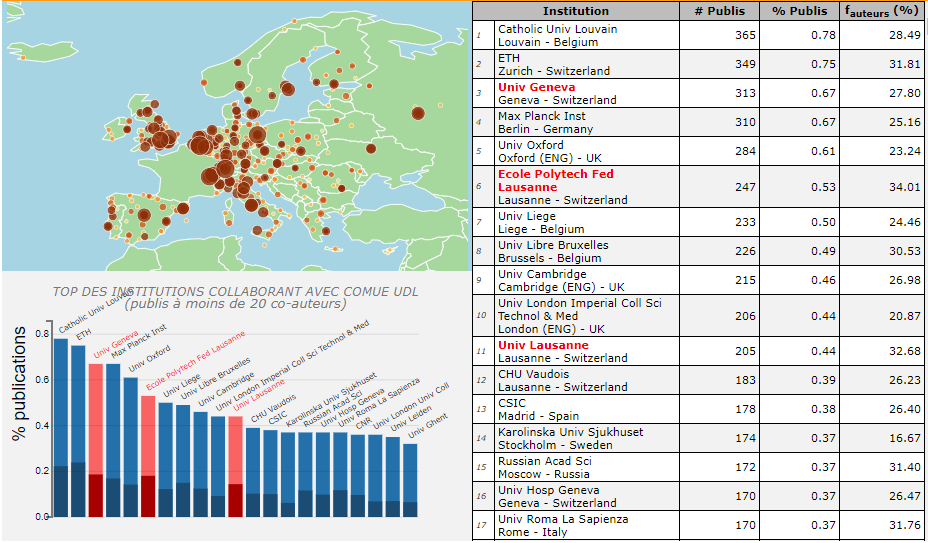 2019/ Bibliometry & International Rankings. How can bibliometry shed light on the status and the reach of an academic institution? Working for the University of Lyon, I developped a series of interactive dashboards allowing to track the position in international rankings, the number of publications and citations (per labs / database), the emerging research teams or thematics, the collaborations with other labs or international institutions, the links with the socio-economics world, etc. These tools can be used to give an objective oversight on an institution and help academic managers to make more informed and effective decisions. Read more.
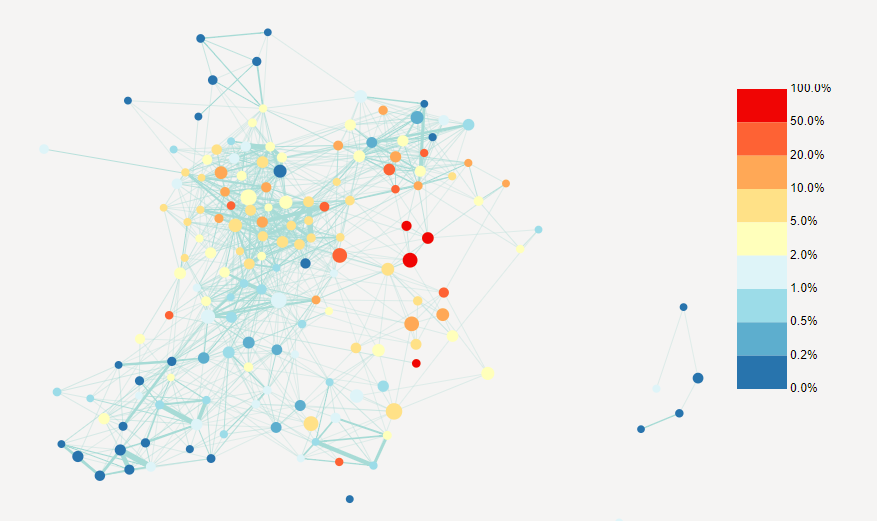 2016/ EducMap. The EducMap research project (in collaboration with researchers from the Laboratoire de l'Education in Lyon) aims at a better understanding of the communities working in the field of research in education thanks to the exploration of maps based on bibliographic data. In this project, we investigate various questions regarding the topics of research in education: their nature, their interconnection, their links to other bodies of research in the natural and social sciences, their evolution, etc. Read more.
 2016/ Digital Promise's Research Map. How can we help educators and education policy makers to get a picture of the current research topics in the field of education research? To tackle this issue, I collaborated with Digital Promise - a US non-profit organization working on spurring innovation in education through technology and research - on their "Research Map" project, to detect research topics from bibliographic data. A huge effort of interpretation of the topics found by the bibliometric coupling analysis was done by experts in the field, who delivered short reviews on each of them, detailing their key findings and providing links to relevant online materials. Read more.
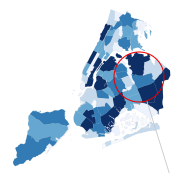 2016 / Urban Exposures. How can cell phone data helps us better understand human exposure to air pollution? We mapped the movements of several million people using ubiquitous cell phone data, and intersected this information with neighborhood air pollution measures. Covering the expanse of New York City and its 8.5 million inhabitants, the study reveals where and when New Yorkers are most at risk of exposure to air pollution – with major implications for environment and public health policy. Read more.
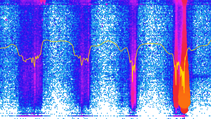 2014/ Tweet Bursts. The more excited we are, the shorter we tweet! We investigated messages from various online media created in response to major, collectively followed events such as sport tournaments, presidential elections, or a large snow storm. We relate content length and message rate, and find a systematic correlation during events which can be described by a power law relation: the higher the excitation, the shorter the messages. Read more.
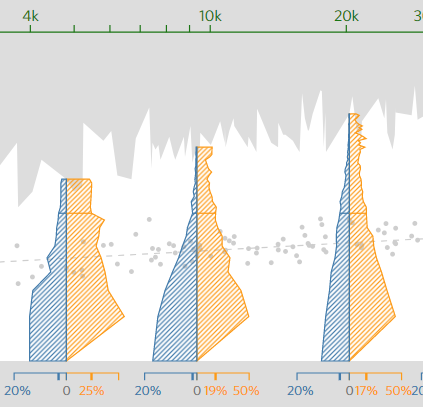 2014/ Urban Village. Analyzing mobile communication data from UK and Portugal, we investigated how people’s social networks depend on whether they live in a small town or a big city. Our study reveals a fundamental pattern: our social connections scale with city size. People who live in a larger town make more calls and call a larger number of different people. Read more.
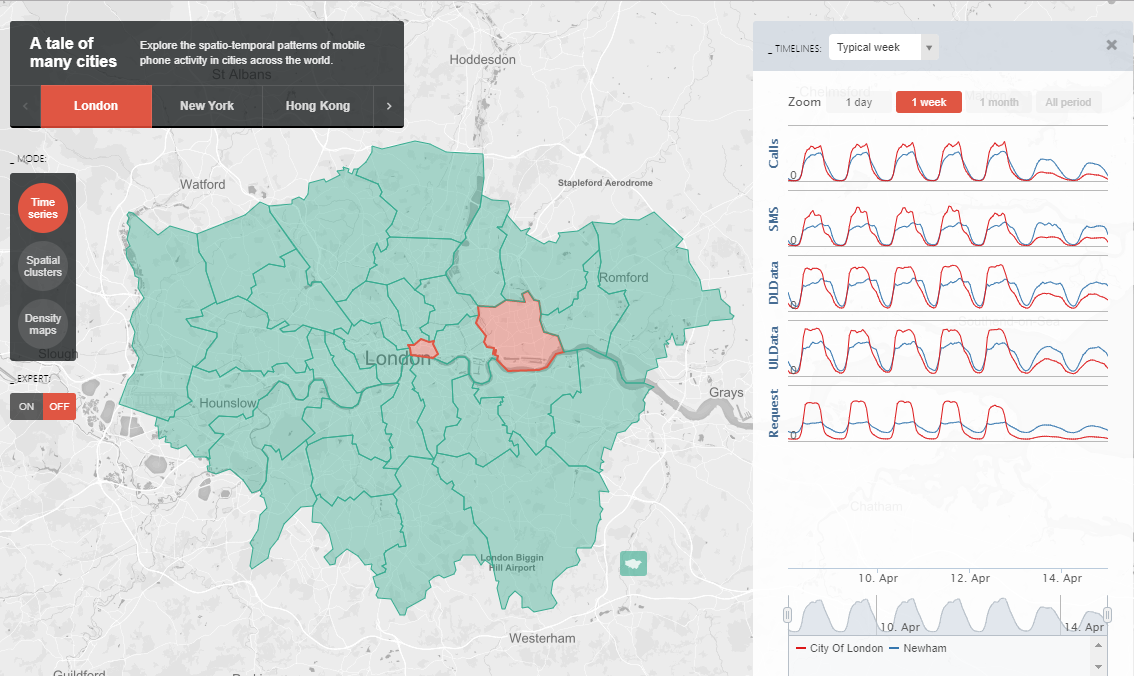 2014/ Many Cities. The ManyCities project aims at exploring telecommunication data (including calls, SMS, data requests and data traffic) within major cities. What are the repeating dynamical patterns? What is the impact of specific events? Which are the similarities and difference between major cities in different parts of the world? Explore the data on the ManyCities web app we developed at MIT in collaboration with Ericsson. Read more.
 2012/ Complex Systems Sciences. Based on the bibliographic records of around 200.000 papers dealing with complex systems, we built topical maps based on references used by the articles. We explored the nature of the communities emerging from our analysis, their relationships and their evolution. Are complex systems trully interdisciplinary? Is there a universal law shared by all disciplines? Read more.
 2012/ Emergence of social structure. How can we explain the existence of lasting entities (institutions) from non lasting agents? In collaboration with sociologists from Science Po Medialab, we worked on models describing the emergence and dynamics of social structure. Read more.
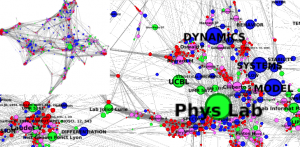 2011/ Research at ENS LYON. “Draw me your institution”. We created several maps describing the research performed at the ENS Lyon, based on bibliographic data. Read more.
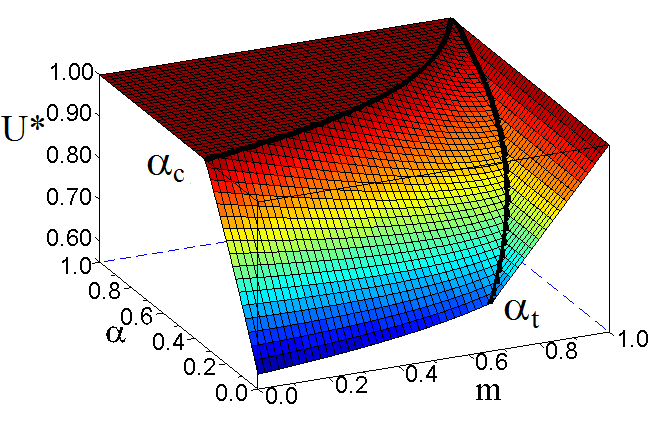 2009/ Segregation models. In collaboration with an economist, we proposed a general analytical formulation of Schelling’s segraration model, extending physicists’ concept of free energy to account for individual dynamics. Read more.